
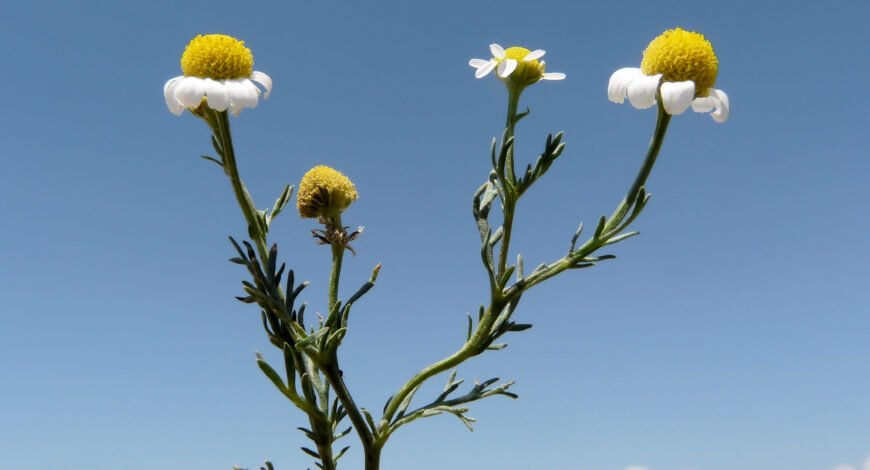
In Urdu, chamomile is بابونہ (babuna), and the dried flower is usually sold as گل بابونہ (gul-e-baboona). It is a small, daisy-like blossom that is steeped into a golden, naturally caffeine-free herbal tea — long valued in the Unani and folk traditions of South Asia as a gentle, everyday infusion. Below is what chamomile actually is, the Urdu names you will come across, how it is traditionally enjoyed, and how to brew a proper cup at home.
- Chamomile in Urdu is بابونہ (babuna); the dried flower is گل بابونہ (gul-e-baboona).
- The type used for tea is usually German chamomile, Matricaria chamomilla.
- It is naturally caffeine-free, with a mild, apple-like, floral taste.
- Traditionally enjoyed as a calming evening cup — it is a food and drink, not a medicine.
- Skip it if you are allergic to ragweed or daisies, and check with a professional if you are pregnant or on blood thinners or sedatives.
What is chamomile? (بابونہ)
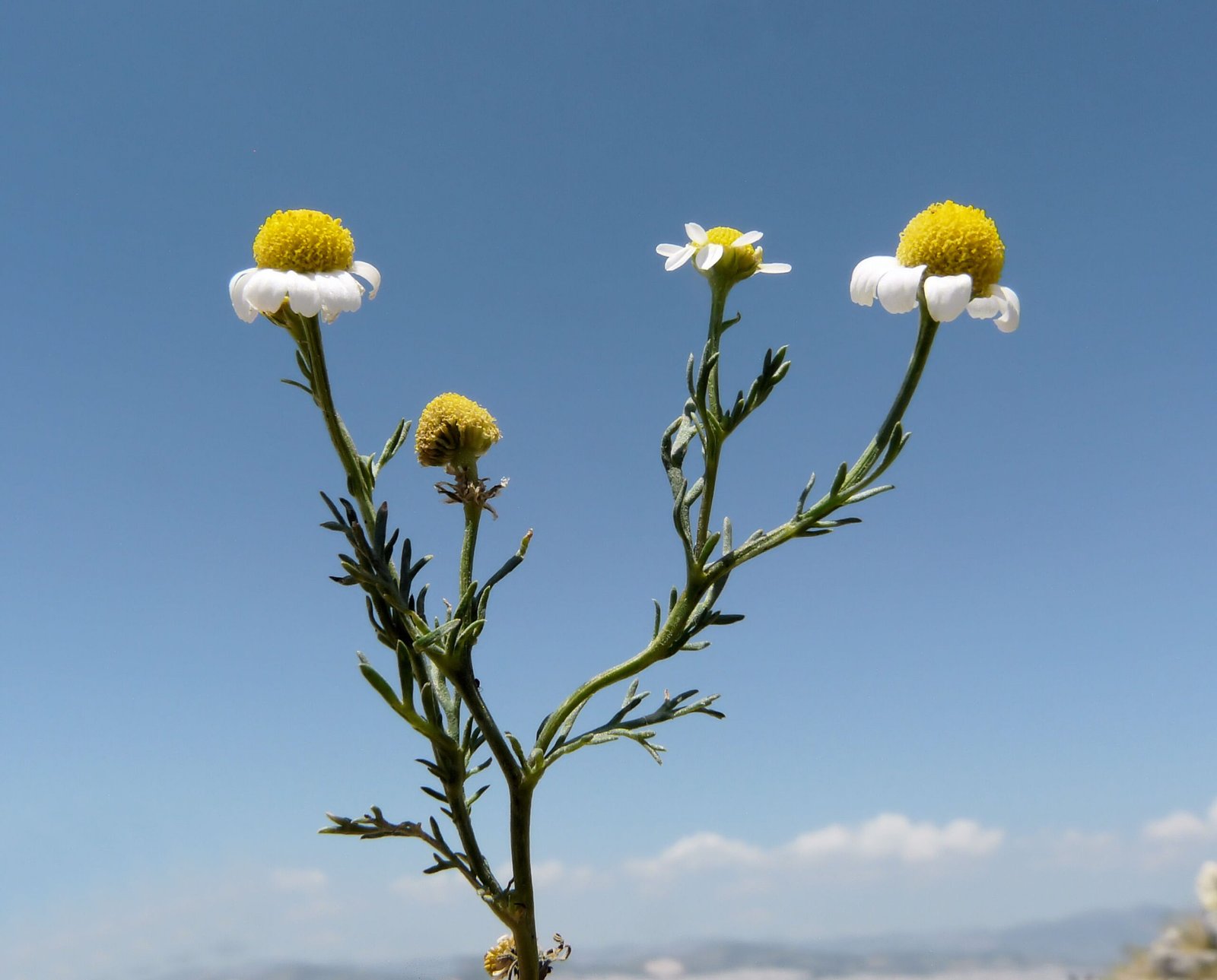
Chamomile is a flowering herb in the daisy (Asteraceae) family. The kind most people brew is German chamomile (Matricaria chamomilla L.), an annual with fine, feathery leaves, white petals and a domed golden centre, and a soft, apple-like scent. A close relative, Roman chamomile (Chamaemelum nobile), is a low-growing perennial used more in aromatherapy and skincare than for drinking. Chamomile grows across temperate regions and thrives in sunny, well-drained ground — including the mountain valleys of northern Pakistan, where wild herbs are a part of everyday kitchen tradition.
Chamomile in Urdu: the names you will see
If you are shopping for chamomile in Pakistan, you will see a few different Urdu and Unani names for the same plant. They all refer to chamomile:
| Urdu / Unani name | Transliteration | What it refers to |
|---|---|---|
| بابونہ | Babuna | The chamomile plant / herb |
| گل بابونہ | Gul-e-Baboona | The chamomile flower, as sold dried |
| بابونے کی چائے | Babune ki chai | Chamomile tea |
| روغنِ گل بابونہ | Roghan-e-Gul-e-Baboona | Chamomile (flower) oil |
In classical Unani texts, chamomile (babuna) appears as a warming, aromatic herb; today most Pakistani households simply know گل بابونہ as the flower you steep for a calming, caffeine-free cup of tea.
What is inside a chamomile flower?
Most of chamomile’s character comes from the flower head, which holds the plant’s aromatic essential oil and a group of plant pigments called flavonoids. Researchers reviewing the plant have catalogued roughly 120 different compounds in it. The best known are the flavonoid apigenin (which shows up in a brewed cup mostly as apigenin-7-O-glucoside) and essential-oil terpenoids such as α-bisabolol and chamazulene, which give chamomile its distinctive scent and its faint blue-green tint when concentrated. And, unlike black or green tea, chamomile contains no caffeine.
How is chamomile traditionally used?
In the Unani and folk traditions of South Asia and the Middle East, گل بابونہ has long been brewed as a soothing, aromatic infusion and enjoyed as a caffeine-free tea — often in the evening, when a warm, calming cup is welcome. The dried flowers have also been used in warm rinses and steams in traditional home skincare and haircare routines. Chamomile is a popular companion to other caffeine-free herbs; many people blend or alternate it with mountain mint tea or golden calendula (marigold) tea for variety.
To be clear, we are describing traditional and culinary use only: chamomile tea is an enjoyable herbal drink, not a treatment or cure for any disease or medical condition. If you are looking into herbs for a specific health concern, speak with a qualified healthcare professional.
There are plenty of easy ways to enjoy it day to day. Stir in a little honey or a slice of lemon; brew it strong, chill it and pour it over ice for a summer drink; or steep it with a few mint leaves for a fragrant after-dinner cup. Many people like a spoonful of chamomile flowers warmed in milk as a comforting bedtime ritual. However you take it, it stays a gentle, caffeine-free drink that suits almost any time of day.
How to brew chamomile tea (step by step)
Brewing chamomile well is mostly about keeping the delicate aromatic oils in the cup. Here is a simple, reliable method:
- Measure. Use about a tablespoon (3–4 g) of dried گل بابونہ flowers, or one tea bag, per cup (~200 ml).
- Heat the water. Bring it to just off the boil — around 93–95°C. Off-the-boil water treats the flowers more gently than a rolling boil.
- Steep, covered. Pour the water over the flowers and put a lid or saucer on the cup or pot. Covering it traps the fragrant essential oils that would otherwise escape with the steam.
- Wait 5–7 minutes. Chamomile does not turn bitter with a longer steep, so you can leave it up to 10 minutes for a stronger, more aromatic cup.
- Strain and enjoy. Pour through a strainer (or lift out the bag). A little honey or a mint leaf is a nice optional touch.
Buying and storing chamomile (گل بابونہ)
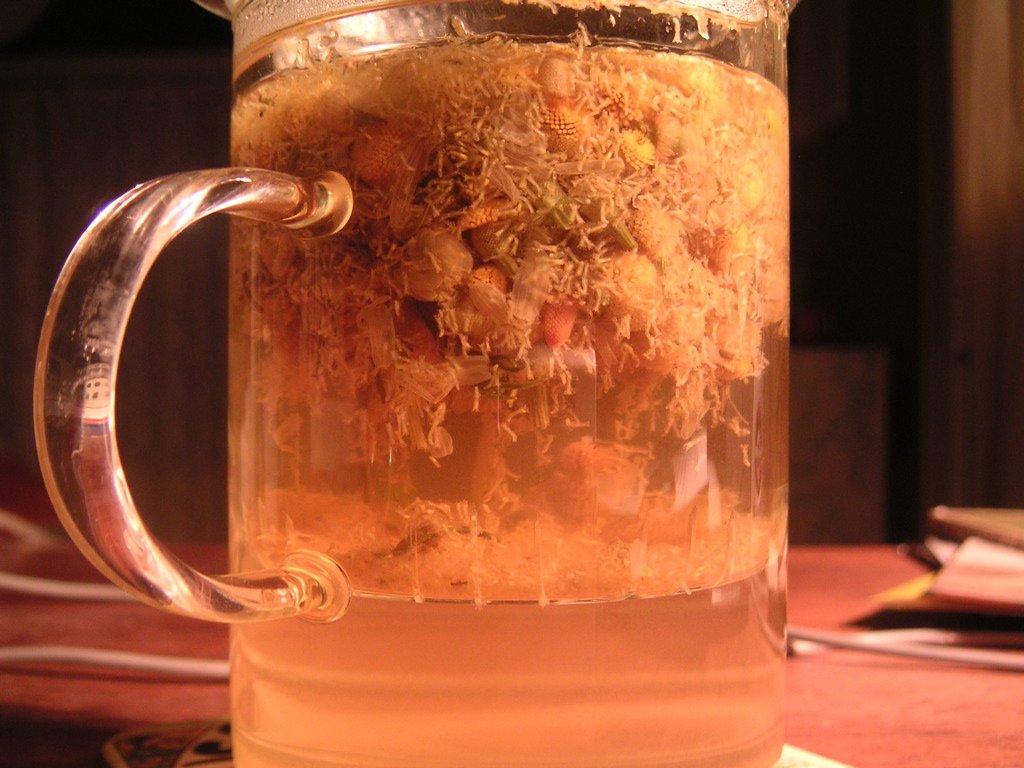
Chamomile is sold two main ways: as whole dried flowers (loose گل بابونہ) and as pre-portioned tea bags. Whole flowers give you the freshest aroma and let you control the strength of the cup; tea bags are simply more convenient. When buying loose flowers, look for intact, golden-and-white blossoms with a clear, sweet, apple-like smell — dull, brown, powdery or scentless flowers have usually lost their fragrant essential oils and will make a flat cup.
To keep chamomile at its best, store it in an airtight container away from light, heat and moisture; a cool, dark cupboard is ideal, not a sunny kitchen shelf. Kept this way, dried chamomile flowers hold their aroma for roughly a year, so it is worth buying in amounts you will finish within a few months rather than one large batch. As with the region’s other wild botanicals — from traditional Karakoram salajeet (shilajit) to the mountain herbs behind Gilgit-Baltistan’s organic superfoods — careful drying, clean handling and honest sourcing are what carry the flavour and aroma through to your cup.
Is chamomile safe? Who should take care
Enjoyed as a tea, chamomile is generally well tolerated by most people. A few sensible cautions are worth knowing:
- Allergies. Chamomile is in the daisy (Asteraceae) family. If you are allergic to ragweed, marigolds, chrysanthemums or daisies, you may react to chamomile — it is best avoided.
- Medicines. Chamomile may interact with blood thinners such as warfarin and with sedative medicines. If you take regular medication, check with your doctor first.
- Pregnancy & breastfeeding. There is not enough good evidence on chamomile during pregnancy or breastfeeding, so speak with a healthcare professional before using it regularly.
This article is general information, not medical advice.
Frequently asked questions
What is chamomile called in Urdu?
Chamomile in Urdu is بابونہ (babuna). The dried flower, as sold for tea, is usually called گل بابونہ (gul-e-baboona), and chamomile tea is babune ki chai.
Does chamomile tea contain caffeine?
No. Chamomile is a herbal infusion made from flowers, not from the tea plant, so it is naturally caffeine-free — which is why many people enjoy it in the evening.
What does chamomile tea taste like?
It has a mild, gentle flavour that is often described as floral with a soft, apple-like sweetness. A little honey rounds it off nicely.
When is chamomile tea usually enjoyed?
Traditionally it is enjoyed as a warm, calming caffeine-free cup, most often in the evening or before bed, though there is no wrong time to drink it.
Who should avoid chamomile?
Anyone allergic to ragweed or other daisy-family plants should avoid it. If you are pregnant, breastfeeding, or taking blood thinners or sedatives, check with a healthcare professional before drinking it regularly.
Sources & references
- Chamomile: Usefulness and Safety. National Center for Complementary and Integrative Health (NCCIH). NCCIH — Chamomile: Usefulness and Safety
- Srivastava JK, et al. Chamomile: A herbal medicine of the past with a bright future. Molecular Medicine Reports (PMC). Read the Srivastava et al. chamomile review
- El Mihyaoui A, et al. Chamomile (Matricaria chamomilla L.): A Review of Ethnomedicinal Use, Phytochemistry and Pharmacological Uses. Life (PMC). Read the El Mihyaoui et al. review of Matricaria chamomilla
Image credits: Chamomile flowers photo by Andrea Moro (CC BY-SA 3.0); chamomile tea photo by “Greg” (CC BY-SA 2.0) — both via Wikimedia Commons.
For another aromatic mountain plant used in the kitchen rather than the teapot, see our guide to cooking with juniper berries and how to crush them.

