
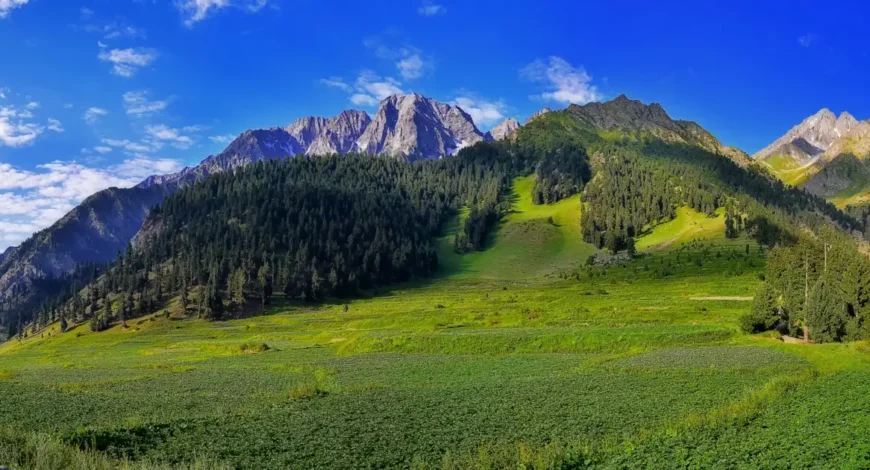
Mountain honey from Gilgit-Baltistan comes in two distinct styles. Wildflower (multi-flora) honey is gathered from mixed alpine blossom and is lighter, milder and different in every batch. Buckwheat-flower honey comes from the region’s buckwheat fields and is dark brown, malty and assertive. Both are raw and unblended; the choice between them is about flavour strength, not quality.
- Two main styles come out of Gilgit-Baltistan: multi-flora wildflower honey and single-source buckwheat-flower honey.
- Wildflower is the everyday honey — lighter, floral, and naturally variable from season to season and valley to valley.
- Buckwheat is the strong one — dark, malty, almost molasses-like, and as much a cooking honey as a spooning honey.
- Colour is the quickest clue. Codex notes honey ranges from nearly colourless to dark brown, and in laboratory testing the darkest honeys measure highest for antioxidant capacity.
- Crystallisation is normal and is not a sign of adulteration or of added sugar.
- Never give honey to a baby under 12 months — in any form. See the safety notes below.
What “mountain honey” actually means
“Mountain honey” is not a botanical category. It is a description of where the bees foraged: high valleys rather than farmland monocultures or roadside scrub. In Gilgit-Baltistan that means a short, concentrated flowering season squeezed between snowmelt and the first cold nights, and a mix of wild alpine flowers, orchard blossom and cultivated crops within a few kilometres of the hive.
What ends up in the jar is decided almost entirely by that foraging radius. The internationally agreed Codex Alimentarius Standard for Honey puts it plainly: honey “consists essentially of different sugars, predominantly fructose and glucose”, and its colour, consistency, flavour and aroma all “vary” and “are derived from the plant origin”. A honey does not taste of the mountain. It tastes of what was flowering on it.
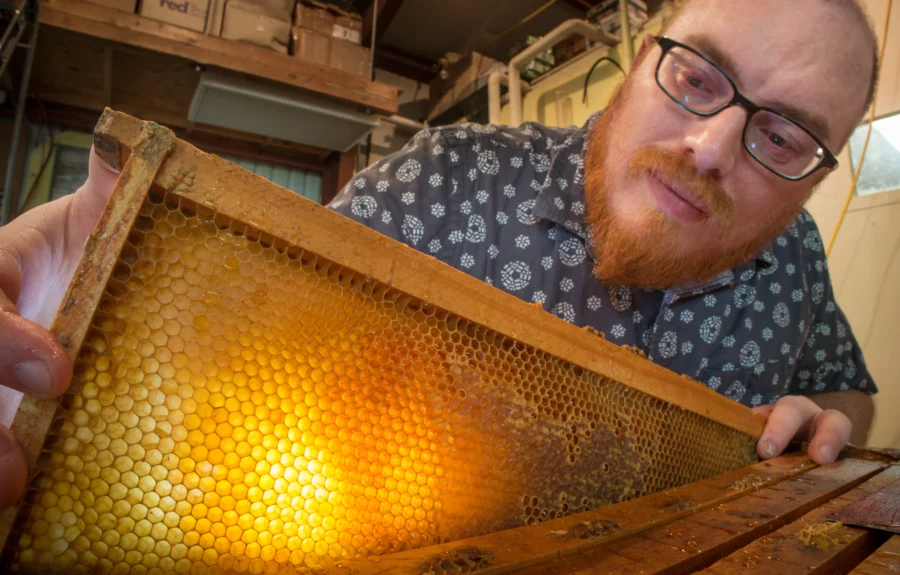
Wildflower (multi-flora) mountain honey
This is the honey most people mean when they ask for mountain honey. Bees work whatever is open — wild alpine flowers, herbs, apricot and apple blossom, clover — so the honey is a blend created by the bees rather than by a packer.
Expect a light amber to mid-amber colour, a soft floral aroma and a rounded, uncomplicated sweetness. Because the flora shifts through the season and from one valley to the next, no two harvests are identical. An early-summer jar and a late-summer jar from the same apiary can look and taste noticeably different. That variability is the honest signature of a genuine multi-flora honey, not a defect — a product that tastes exactly the same year after year has usually been blended to a specification.
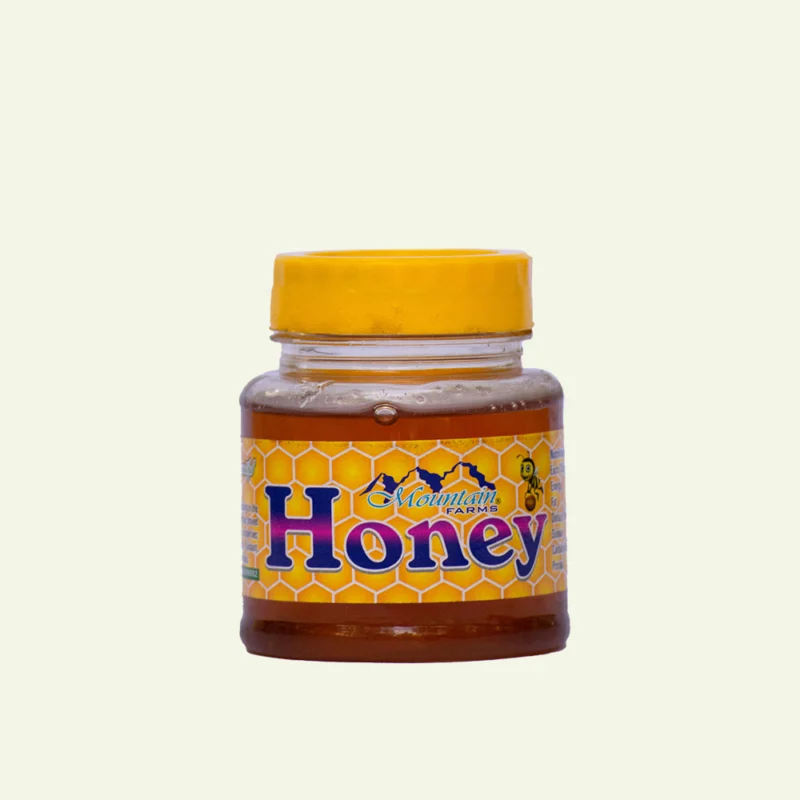
Use it as your default: on toast, in yoghurt, stirred into tea once it has cooled below boiling, or anywhere you want sweetness without a strong competing flavour. Our Mountain Honey (Local Flora) from Gilgit-Baltistan is this style — raw, unfiltered and unblended.
Buckwheat-flower mountain honey
Buckwheat is not a grass or a true cereal, and in Pakistan it is grown mainly in the northern mountains. When those fields flower, they produce dense white blossom that bees work heavily — and the resulting honey is unlike anything else in the region.
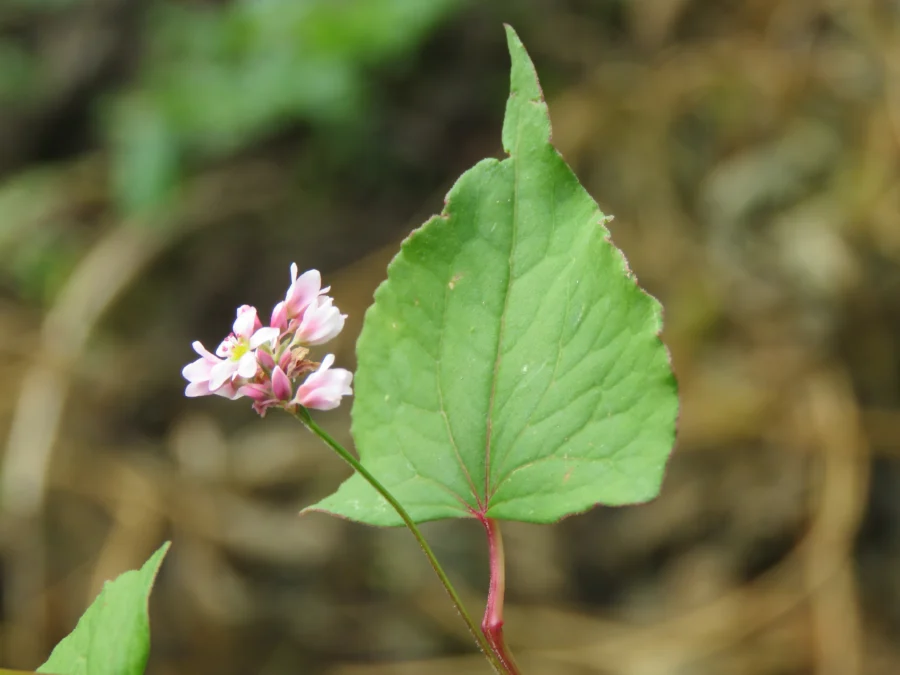
Buckwheat honey is dark brown, thick, and strongly flavoured: malty and molasses-like, with a lingering finish that some people describe as almost savoury. It divides opinion, and it should. If you want a delicate honey, this is not it.
Where it earns its place is in cooking. It stands up to heat and to strong ingredients in a way that light honey cannot — in dark breads and gingerbread, in glazes and barbecue marinades, with aged cheese, or drizzled over walnuts and thick yoghurt. Our Mountain Honey (Buckwheat Flower) comes from the same region as the grain itself, which we cover in our guide to baking with buckwheat flour and our guide to cooking buckwheat groats.
Wildflower vs buckwheat: side by side
| Wildflower (multi-flora) | Buckwheat flower | |
|---|---|---|
| Colour | Light to mid amber | Dark brown, near-opaque |
| Flavour | Floral, mild, rounded | Malty, molasses-like, assertive |
| Nectar source | Many wild and orchard flowers | Mainly buckwheat blossom |
| Batch consistency | Varies with season and valley | More consistent, tied to one crop |
| Best for | Everyday use, tea, yoghurt, toast | Baking, glazes, marinades, strong cheese |
| If you like… | Light, clean sweetness | Treacle, dark muscovado, rye bread |
Why the dark one measures higher for antioxidants
Honey colour tracks its phenolic content, and phenolics are what antioxidant assays pick up. In a study of honeys from seven floral sources, researchers at the University of Illinois measured antioxidant capacity using the ORAC assay and found values spanning more than a fivefold range — with the darkest honeys, buckwheat among them, at the top. Phenolic content and ORAC score tracked each other almost exactly.
That last line matters, and we would rather say it ourselves than have you find it elsewhere. In 2012 the USDA withdrew its own ORAC database, on the grounds that in-vitro antioxidant values cannot be extrapolated to effects in the body and were being routinely misused in marketing. So treat the chart above as what it is: a fact about the chemistry of dark honey, and a reason buckwheat honey tastes the way it does. It is not a health claim, and we are not making one.
How to tell real mountain honey from a blend
Pakistan’s honey shelf is crowded, and “pure” and “organic” on a label mean whatever the packer wants them to mean. The Codex standard gives you four criteria that actually have definitions behind them:
- Nothing added. Honey sold as honey “shall not have added to it any food ingredient, including food additives”. No glucose syrup, no water, no flavouring.
- Moisture not more than 20% (23% for heather honey). Wetter honey ferments.
- Fructose and glucose together, at least 60 g per 100 g for blossom honey — and sucrose no more than 5 g per 100 g. Cane-sugar feeding pushes sucrose up.
- Not over-heated, and not chemically treated. Honey must not be heated “to such an extent that its essential composition is changed”, and chemical treatments “shall not be used to influence honey crystallisation”.
Two practical consequences. First, the home tests that circulate on social media — dropping honey in a glass of water, holding a flame to it, checking whether it soaks into paper — do not reliably separate real honey from syrup. The criteria above are laboratory measurements, which is precisely why they exist. Second, a seller who can tell you the floral source, the region and the harvest season is giving you far more useful information than one who prints “100% pure” in a large font.
How to use and store mountain honey
Keep it off the boil. Stir honey into warm drinks rather than boiling ones. This is not folklore — it follows directly from the Codex rule that honey should not be heated enough to change its essential composition. Practically, high heat also flattens the aromatic notes you paid for. If you are brewing chamomile tea the way we describe here, let it cool for a minute before the honey goes in.
Store it at room temperature, lid closed. Honey is hygroscopic — it pulls moisture out of the air, and moisture is what lets it ferment. A cupboard is better than a fridge; refrigeration only speeds up crystallisation.
Expect it to set. Crystallisation is glucose coming out of solution, and every raw honey does it eventually, some within weeks. It is a sign the honey has not been aggressively processed. To re-liquefy, stand the jar in warm — not hot — water and stir. Do not microwave it.
Match the honey to the job. Light wildflower honey for anything delicate; dark buckwheat honey where it has to hold its own against heat, spice or a strong cheese.
Safety notes
- No honey before 12 months of age. This is the one non-negotiable rule with honey. The US Centers for Disease Control and Prevention advises that honey should not be given to a child under one year old, because it can carry Clostridium botulinum spores that cause infant botulism. That covers every form — raw, pasteurised, baked into food, mixed into water or formula, or put on a pacifier or used as ghutti.
- Honey is still a sugar. By definition it is at least 60% fructose and glucose. It is a natural sweetener, and it should be counted as a sweetener in your day.
- Allergies. Rare, but real. If you have a known allergy to pollen or bee products, treat a new honey cautiously.
- No medical claims. Nothing on this page is medical advice, and mountain honey is a food, not a treatment for any condition. If you have a health concern, speak to a doctor.
Where this honey comes from
Gilgit-Baltistan sits at the meeting point of the Karakoram, the Himalaya and the Hindu Kush. The same conditions that make the region difficult to farm — altitude, thin air, wide day-night temperature swings, glacial meltwater and a growing season measured in weeks — are what concentrate flavour in everything that does grow there. That pattern runs through the whole regional catalogue, and we set it out in full in why Gilgit-Baltistan grows such exceptional organic crops.
For honey specifically, it means small, scattered apiaries rather than industrial-scale operations, a single main harvest rather than continuous cropping, and a product that changes character between one valley and the next. That is a limitation for anyone trying to sell a standardised jar. For anyone who actually likes honey, it is the entire point.
Frequently asked questions
What is mountain honey?
Mountain honey is honey produced by bees foraging in high mountain valleys rather than on lowland farmland. It is a description of origin, not a botanical type. In Gilgit-Baltistan it usually means either multi-flora wildflower honey or single-source buckwheat-flower honey.
Is buckwheat honey better than wildflower honey?
Neither is better; they are built for different jobs. Wildflower honey is lighter and milder and suits everyday use. Buckwheat honey is dark and strongly malty, which makes it better in baking, glazes and marinades and alongside strong flavours. Choose by how you plan to use it.
Why has my mountain honey gone solid and grainy?
That is crystallisation, and it is normal. Glucose comes out of solution over time and every raw honey sets eventually. It is not a sign of added sugar or of a fake product. Stand the jar in warm water and stir to re-liquefy it.
Can babies have mountain honey?
No. The CDC advises that honey should not be given to children under 12 months in any form, including raw, pasteurised or baked honey, because it can contain Clostridium botulinum spores that cause infant botulism. After the first birthday, honey is fine.
Does darker honey mean better honey?
Darker honey has more phenolic compounds, and in laboratory testing it scores higher on antioxidant assays such as ORAC. That is a fact about its chemistry, not a health benefit — the USDA withdrew its own ORAC database in 2012 because those laboratory values cannot be extrapolated to effects in the body. Colour tells you about flavour strength far more reliably than it tells you about quality.
How should I store mountain honey?
At room temperature, in a closed jar, away from steam and direct sunlight. Do not refrigerate it, as cold speeds up crystallisation. Kept dry and sealed, honey lasts a very long time.
Sources
- FAO/WHO Codex Alimentarius, Standard for Honey (CXS 12-1981, revised 2001) — definition, moisture, sugar and processing limits
- Gheldof & Engeseth (2002), “Antioxidant Capacity of Honeys from Various Floral Sources”, J. Agric. Food Chem. 50(10):3050–3055 — ORAC range and dark-honey finding
- Reporting on the USDA’s 2012 withdrawal of its ORAC database and its stated reasons
- US Centers for Disease Control and Prevention — foods to avoid before 12 months, including honey
- US Centers for Disease Control and Prevention — botulism prevention and infant botulism
Written by the Pak Seabuckthorn Team, who source and hand-select superfoods from the Karakoram and Gilgit-Baltistan. Shop our raw wildflower mountain honey and our dark buckwheat-flower mountain honey.

