
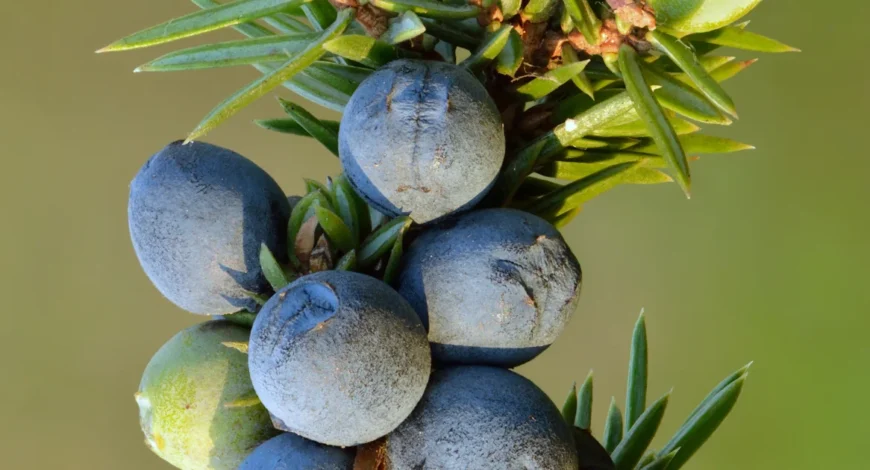
Juniper berries are the small, blue-black cones of the juniper shrub, used as a spice rather than eaten as fruit. They taste piney, peppery and faintly citrusy — the flavour behind gin — and they are best used dried and lightly crushed, about 4–8 berries per dish, in slow-cooked meat, cabbage, sauerkraut, brines and marinades.
- Juniper berries are a spice, not a snack — they are too resinous and bitter to eat by the handful.
- Crush them lightly just before cooking to open up the aroma; do not grind them to powder.
- 4–8 berries is enough for a family-sized stew, brine or roast.
- They pair classically with lamb, beef, game, pork, cabbage and sauerkraut.
- Only culinary juniper species belong in food — buy from a food supplier rather than foraging ornamental garden junipers.
- Juniper should be avoided during pregnancy; see the safety notes below.
What are juniper berries, botanically?
Despite the name, juniper berries are not berries at all. They are the female seed cones of the juniper, a coniferous shrub — but unlike a pine cone, the scales are fleshy and fused, so the ripe cone looks and feels like a small round fruit about 6–9 mm across. Cones start green and take two to three years to ripen to a dusty blue-black, which is why you often see both colours on the same branch.
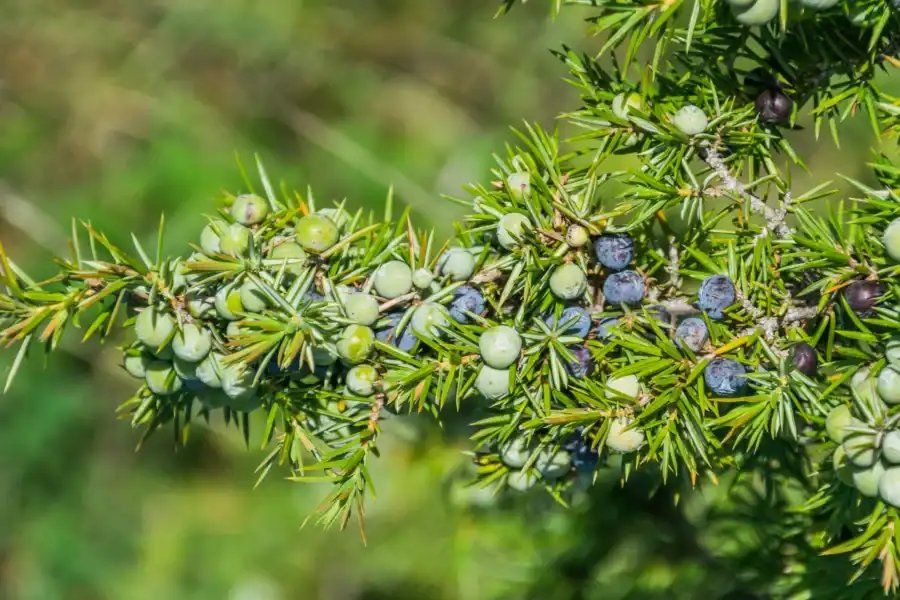
The species used as a kitchen spice is Juniperus communis, the common juniper — the same one distilled into gin. It grows across a huge swathe of the northern hemisphere, from Scandinavia and the Alps through to the mountains of Central and South Asia.
What do juniper berries taste like?
The dominant note is resinous pine, followed by black pepper, a cool citrus lift and a bitter finish. It is an assertive flavour that works as a background rather than a headline: in a slow-cooked dish, juniper does not announce itself so much as make the meat taste more of itself, with a clean, forest-like edge.
That character comes almost entirely from the volatile oil in the cone. In a 2014 analysis of Bulgarian juniper berry oil, monoterpene hydrocarbons made up around 80% of the oil, with α-pinene alone accounting for just over half — which is exactly why the smell reads as “pine forest” before anything else.
Which junipers belong in the kitchen?
This matters more than it does with most spices. Juniperus communis is the culinary standard, and it is what reputable food suppliers sell. Some other junipers are not suitable for eating: savin juniper (Juniperus sabina) in particular contains sabinyl acetate and related compounds and is treated as poisonous, and Juniperus oxycedrus is also listed as unsuitable.
The practical rule is simple: buy juniper berries as a food product from a supplier who sells them for cooking, and do not harvest cones off ornamental junipers in gardens or hedges unless you can positively identify the species. Our dried juniper berries are sold as a culinary spice and arrive whole, so you can crush them fresh.
How to use juniper berries in cooking
- Measure conservatively. Start with 4–6 berries for a stew or roast serving four, and 8–10 for a large brine. Juniper is easy to overdo; too much turns a dish medicinal and bitter.
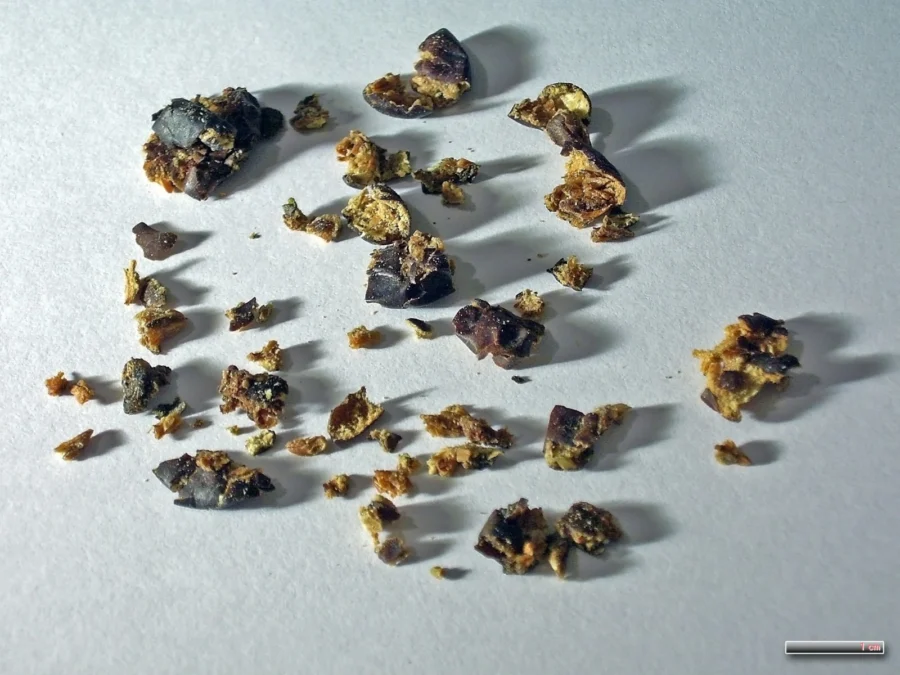
- Crush, do not grind. Press the berries with the flat of a knife or give them a few knocks in a mortar until they just split. You want to break the skin and expose the resin, not reduce them to dust.
- Add them early. Juniper releases its flavour slowly, so put it in at the start of a braise, marinade or brine rather than at the end.
- Fish them out, or leave them in. Crushed berries soften during long cooking and can be left in a rustic stew. For a smooth sauce, tie them in a muslin bag or a tea infuser and lift them out before serving.
- Pair with fat and acid. Juniper is at its best against rich meat, cream or cabbage, and it likes a squeeze of something sharp alongside — wine, vinegar or citrus.
Classic dishes and pairings
Juniper is a backbone spice in German, Alsatian, Scandinavian and Mediterranean cooking. If you are not sure where to begin, start here.
| Use it in | How | Rough amount |
|---|---|---|
| Braised lamb, beef or game | Crushed, added with the stock at the start of the braise | 4–6 berries |
| Cabbage & sauerkraut | Crushed, simmered with the cabbage — the classic Alsatian pairing | 5–8 berries |
| Brines and cures | Whole, cracked, steeped with salt, bay and peppercorns | 8–10 berries per litre |
| Dry rubs | Coarsely ground with black pepper, garlic and rosemary | 1 tsp crushed |
| Pickles | Whole, dropped into the pickling jar with mustard seed and dill | 4–6 berries per jar |
| Poached fruit & baking | Lightly crushed, infused into syrup for pears or apples | 3–4 berries |
A good first attempt: crush six berries with a teaspoon of black peppercorns, rub them into a lamb shoulder with salt, garlic and oil, and braise it slowly with onions and a splash of wine. The juniper will not be obvious — it will just make the whole dish smell like a mountain kitchen.
Juniper in the mountains of Gilgit-Baltistan
Juniper is not an imported curiosity in northern Pakistan. A different species, Juniperus excelsa, grows sparsely across Gilgit-Baltistan, where the Forest, Wildlife & Environment Department records it under the local names Chili and Gal. It is a slow-growing, drought-hardy tree of dry mountain slopes, and its aromatic wood and foliage have long had a place in local household and ceremonial life.
That hardiness is a recurring theme in this region’s plants. The same thin air, cold nights and intense sunlight that shape juniper also shape the orange berries we write about in our guide to what sea buckthorn is and how it is used, and the wider pattern is covered in why Gilgit-Baltistan grows such exceptional organic crops.
If you like aromatic mountain plants in the kitchen, juniper sits naturally alongside our wild thyme (Tumboro) tea from the same valleys, and the herbal traditions we cover in our guide to chamomile and how to brew it.
How to store dried juniper berries
Juniper’s flavour lives in a volatile oil, so it fades with air, heat and light. Keep the berries whole in an airtight jar away from the stove, and crush only what you need. Stored that way they hold good aroma for around a year; once they smell flat and woody rather than sharply piney, they will not do much for your cooking. Buying them whole rather than pre-ground is the single biggest thing you can do for flavour.
What can you use instead of juniper berries?
There is no perfect substitute, but you can get close to the effect:
- Rosemary plus a little black pepper — the closest everyday swap, picking up the resinous, peppery side. Use about ½ teaspoon chopped rosemary in place of 4 berries.
- Caraway seed — works particularly well in cabbage and sauerkraut dishes.
- Bay leaf with a strip of lemon zest — covers the aromatic-plus-citrus side in brines and poaching liquids.
Safety notes: who should skip juniper
Used as a spice, in the small culinary amounts described above, juniper is a normal cooking ingredient. A few cautions are worth knowing:
- Pregnancy. Juniper berries are traditionally regarded as uterine stimulants, and standard culinary reference guidance is that they are avoided during pregnancy. If you are pregnant or trying to conceive, leave them out.
- Concentrated products. Culinary use and concentrated juniper supplements or essential oils are not the same thing. This article is about cooking with whole dried berries only.
- Existing conditions or medication. If you have a kidney condition or take prescribed medication, talk to your doctor before using juniper in any form beyond ordinary seasoning.
- Species. Use berries sold as food. Do not forage from unidentified ornamental junipers.
Nothing here is medical advice, and juniper berries are a seasoning rather than a treatment for any condition.
Frequently asked questions
What do juniper berries taste like?
Piney and resinous, with black-pepper heat, a cool citrus note and a bitter finish. It is the flavour most people recognise from gin.
Can you eat juniper berries raw?
They are edible in the sense that culinary juniper is a food, but they are far too bitter and resinous to eat as fruit. Juniper is used as a spice, crushed and cooked into a dish, not eaten by the handful.
How many juniper berries should I use?
Four to six crushed berries is enough for a stew or roast serving four, and eight to ten for a large brine. Start low, because juniper turns bitter and medicinal if you overdo it.
Do you crush juniper berries before cooking?
Yes. Press them with the flat of a knife or knock them a few times in a mortar so the skins just split. That releases the aromatic oil. Avoid grinding them to a fine powder, which makes the flavour harsh.
Are all juniper berries safe to cook with?
No. Juniperus communis is the culinary species. Savin juniper (Juniperus sabina) is treated as poisonous, and Juniperus oxycedrus is also listed as unsuitable for eating. Buy berries sold as a food product rather than picking cones from ornamental junipers.
What is a good substitute for juniper berries?
Chopped rosemary with a little black pepper is the closest everyday swap, covering the resinous, peppery side. Caraway seed works well in cabbage dishes, and a bay leaf with a strip of lemon zest suits brines and poaching liquids.
Sources
- Höferl et al. (2014), “Chemical Composition and Antioxidant Properties of Juniper Berry (Juniperus communis L.) Essential Oil”, Antioxidants — essential-oil composition figures
- Today’s Dietitian — Herbs & Spices: Juniper Berries (culinary pairings and pregnancy caution)
- Forest, Wildlife & Environment Department, Government of Gilgit-Baltistan — Juniperus excelsa (local names and distribution)
- Gardener’s Path — which juniper species are edible and which to avoid
- Juniper berry — Wikipedia (cone structure and ripening)
Written by the Pak Seabuckthorn Team, who grow and hand-select superfoods from the Karakoram and Gilgit-Baltistan. Shop our whole dried juniper berries and our wild thyme (Tumboro) mountain tea.

