
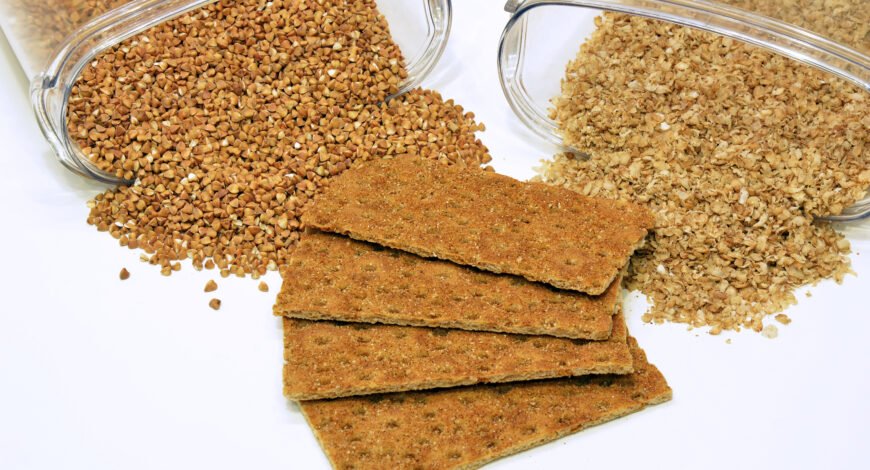
Despite its name, buckwheat is not wheat at all — it is a seed, related to rhubarb, and naturally gluten-free. Milled into flour, it brings a nutty, earthy flavour and a genuinely useful nutrition profile to gluten-free baking. Here is how to bake with it well, plus a couple of simple recipes.
- Buckwheat is naturally gluten-free (not related to wheat).
- A good plant source of protein and fibre, plus the antioxidant rutin.
- Bakes best blended with other gluten-free flours and a binder.
- Great for pancakes, crepes, flatbreads, and hearty loaves.
Is buckwheat really gluten-free?
Yes. Buckwheat (Fagopyrum esculentum) is a pseudo-cereal, unrelated to wheat, barley, or rye, so it contains no gluten. If you have coeliac disease, choose flour labelled gluten-free to rule out cross-contamination during milling.
Buckwheat flour nutrition
Whole-groat buckwheat flour is a good plant source of protein and an excellent source of dietary fibre, and it is rich in minerals and plant compounds — especially rutin, a flavonoid studied for antioxidant and anti-inflammatory properties.
How to bake with buckwheat flour
Because it has no gluten, buckwheat flour cannot stretch and trap air the way wheat does. Three rules make it behave:
- Blend it. Use buckwheat for 25–50% of the flour and pair with rice flour, oat flour, or a gluten-free blend for lighter results.
- Add a binder. Eggs, ground flax (1 tbsp + 3 tbsp water per egg), or a little xanthan gum hold the crumb together.
- Do not overmix, and let batters rest 10–15 minutes so the flour hydrates.
Easy buckwheat pancakes
Whisk 1 cup buckwheat flour, 1 tsp baking powder, a pinch of salt, 1 egg, 1 cup milk (or plant milk), and 1 tbsp oil. Rest 10 minutes, then cook on a medium griddle. Top with mountain honey or a spoon of sea buckthorn jam.
Hearty buckwheat loaf (blend)
Combine 1 cup buckwheat flour with 1.5 cups gluten-free bread flour, 1 tsp xanthan gum, yeast, salt, and warm water; this blend keeps the loaf from being dense while keeping buckwheat’s flavour. Whole buckwheat groats add texture to porridge and salads alongside.
Frequently asked questions
Is buckwheat flour safe for coeliacs?
Buckwheat itself is gluten-free. People with coeliac disease should choose flour certified or labelled gluten-free to avoid cross-contamination during processing.
Can I replace wheat flour 1:1 with buckwheat?
Not directly. Without gluten, 100% buckwheat bakes dense. Use it for 25–50% of the flour with a binder (egg, flax, or xanthan gum) for the best texture.
What does buckwheat flour taste like?
Earthy, nutty, and slightly malty. It pairs especially well with honey, banana, dark chocolate, and tart fruit.
How should I store buckwheat flour?
Keep it in an airtight container in a cool, dark place, or refrigerate for longer life, as whole-grain flours can turn rancid faster than refined ones.
Sources & references
- Buckwheat: Nutrition Facts and Health Benefits. Healthline. Link
- Nutritional and bioactive characteristics of buckwheat for gluten-free products. PMC (2023). Link
Prefer to cook the whole grain rather than bake with the flour? See our guide on how to cook buckwheat groats (kasha).


