
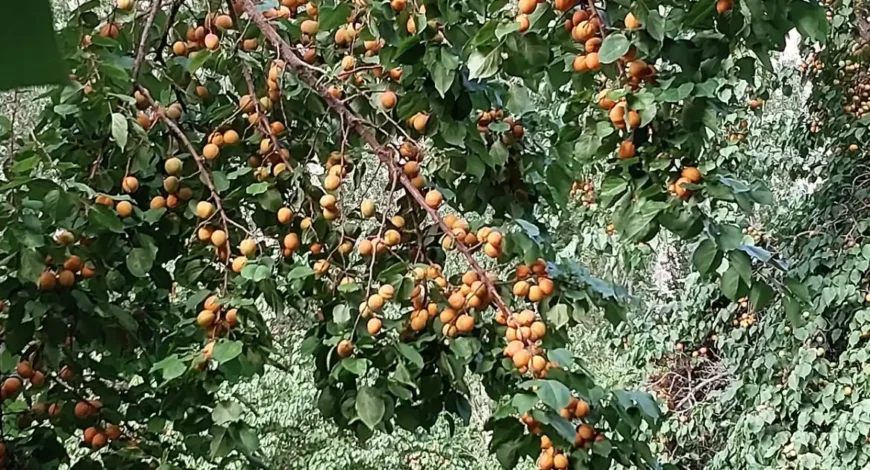
Hunza apricot oil is a light, cold-pressed oil made from the kernels (the almond-shaped seeds) of apricots grown in Gilgit-Baltistan. For generations, families across Hunza and the wider Karakoram have used it as a simple natural moisturiser for skin and a conditioning oil for hair. It is for external, cosmetic use only. This guide explains what the oil is, what is in it, and how to use it on your skin and hair.
- Cold-pressed from apricot kernels; light, fast-absorbing and low in odour.
- Rich in oleic and linoleic fatty acids plus naturally occurring vitamin E.
- Traditionally used to soften skin and condition hair and scalp.
- For external (topical) use only — it is not a food oil, so do not drink or swallow it.
- Always patch-test first and keep it away from the eyes.
What is Hunza apricot oil?
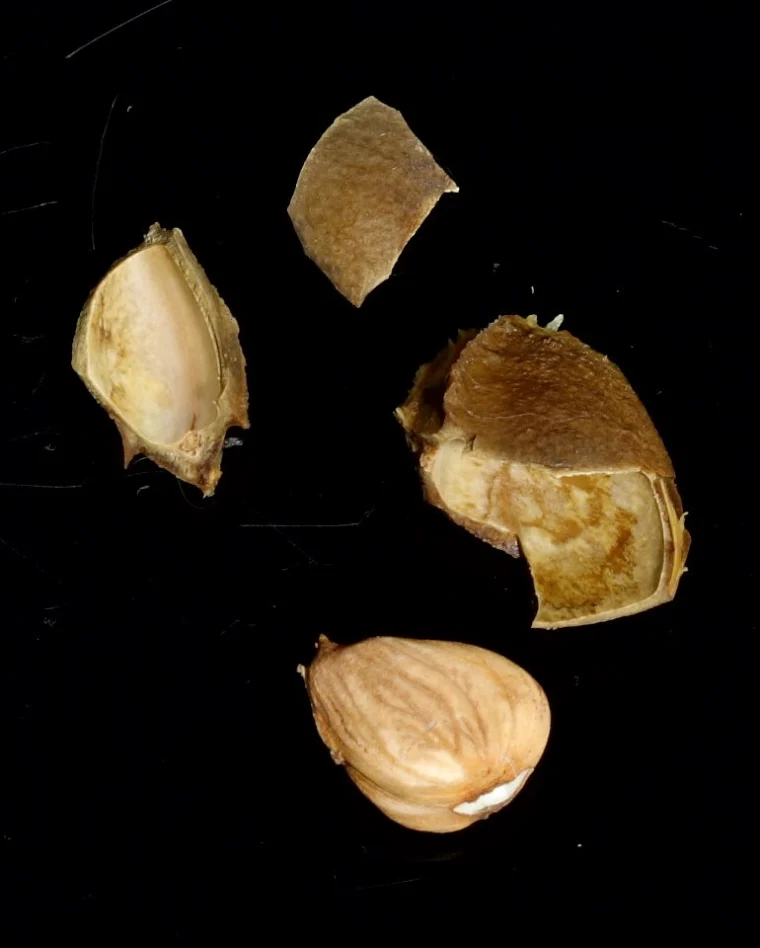
Hunza apricot oil is pressed from the kernels of the apricot (Prunus armeniaca) — the soft, almond-shaped seed found inside the hard stone at the centre of the fruit. Apricots are one of Gilgit-Baltistan’s signature crops, and very little of the fruit is wasted: the flesh is dried, and the stones are cracked to reach the kernels, which are then cold-pressed into oil. Cold pressing simply means the kernels are squeezed without added heat, which helps keep the oil’s natural fatty acids and vitamin E intact.
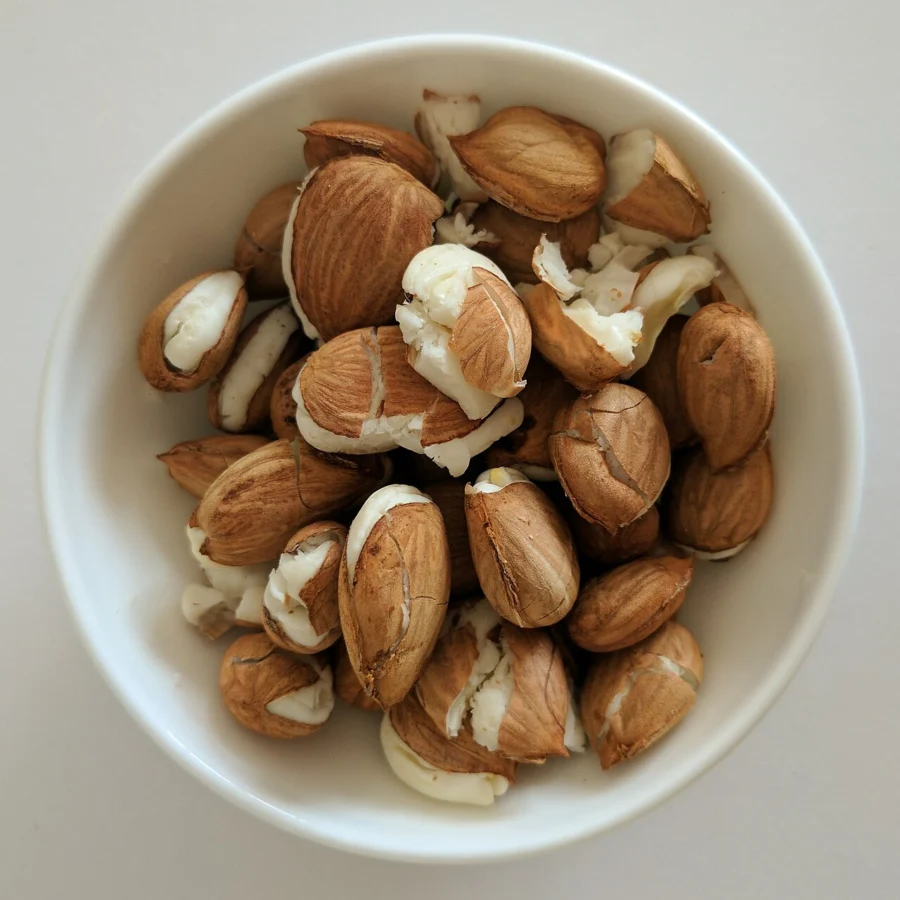
There are two kinds of kernel, and therefore two kinds of oil. Sweet-kernel oil is pressed from sweet apricot varieties and has a mild, nutty aroma. Bitter-kernel oil is pressed from bitter kernels and has a stronger scent; it is used almost entirely as a cosmetic oil. You can read more about the two kernel types in our guide to the differences between sweet and bitter apricot kernels, and shop our cold-pressed sweet apricot kernel oil and bitter apricot kernel oil.
What is in apricot kernel oil?
Most of apricot kernel oil is made up of unsaturated fatty acids, led by oleic acid (an omega-9) and linoleic acid (an omega-6), with smaller amounts of the saturated fatty acids palmitic and stearic. It also carries naturally occurring vitamin E (tocopherols) and plant sterols. Because this blend of fatty acids is close to the natural oils our own skin makes, apricot kernel oil tends to absorb quickly and feel light rather than greasy. The exact figures vary by variety and season; the chart below shows a representative profile.
Traditional uses for skin
In the Karakoram, apricot kernel oil has long been kept as an everyday skin oil. Its light texture and mild scent made it a practical choice in a climate of cold winters, dry mountain air and strong high-altitude sun. People traditionally use it in a few simple ways:
- As a daily moisturiser — a few drops smoothed over clean skin to help it feel soft and supple.
- As a lightweight face oil — patted on at night because it sinks in quickly and does not leave a heavy film.
- As a massage oil — warmed slightly and massaged into dry areas such as elbows, hands and heels.
- After sun or wind exposure — applied to comfort skin that feels tight or dry.
These are cosmetic, feel-good uses — keeping skin soft, smooth and comfortable. Apricot kernel oil is a moisturising oil, not a medicine, and it is not a treatment for any skin condition.
Traditional uses for hair and scalp
The same qualities that make apricot kernel oil a pleasant skin oil also make it a popular hair oil. It is light enough to work through the lengths without weighing hair down, and it helps smooth the hair’s surface so strands look glossier and are easier to comb. Common ways to use it include:
- As a pre-wash oil — worked through mid-lengths and ends, left on for 20–30 minutes, then shampooed out.
- As a scalp massage oil — a small amount massaged into a dry scalp to help it feel less tight and flaky.
- As a finishing oil — a drop or two rubbed between the palms and smoothed over dry ends to tame frizz and add shine.
If you prefer an even lighter, near-odourless option for the hair, our cold-pressed almond oil is a close cousin that works in the same ways.
How to use apricot oil, step by step
- Patch-test first. Dab a little oil on the inside of your forearm and wait 24 hours to check you do not react to it.
- Warm a few drops. Rub 3–5 drops between clean palms; your body heat is enough to warm the oil.
- Apply to slightly damp skin or hair. Oils spread further and absorb better when skin or hair is not bone-dry.
- Massage in gently. Use light, circular motions on skin, or work through the lengths of the hair and into the scalp.
- Less is more. Start with a small amount — you can always add another drop, but too much at once feels greasy.
- For hair treatments, leave the oil on for 20–30 minutes before shampooing, once or twice a week.
Sweet vs bitter apricot kernel oil
Both oils are pressed the same way; the difference is the kernel they come from. Here is a quick comparison to help you choose.
| Sweet apricot kernel oil | Bitter apricot kernel oil | |
|---|---|---|
| Aroma | Mild, softly nutty | Stronger, marzipan-like |
| Typical use | Everyday skin & hair oil | Cosmetic skin & hair oil |
| Feel on skin | Light, fast-absorbing | Light, fast-absorbing |
| How to use | External only | External only |
You may have read that apricot kernels contain a natural compound called amygdalin. This matters for whole bitter kernels if they are eaten, but far less for the pressed oil: amygdalin is water-soluble, not oil-soluble, so it largely stays behind in the leftover seed meal rather than passing into the oil. Even so, the simplest safe rule is the same for both oils — use them on your skin and hair, never as a food. For more on the kernels themselves, see our guide to sweet versus bitter apricot kernels and how to use them safely.
A note on safe use
- External use only. Cosmetic apricot kernel oil is for the skin and hair, not for drinking or cooking.
- Patch-test before first use, and stop if you notice any redness or irritation.
- Keep it out of the eyes; if oil gets in, rinse with plenty of clean water.
- Store it cool and dark and close the cap tightly so the oil stays fresh.
- Apricot kernel oil is a cosmetic moisturiser, not a medicine. If you have a skin or scalp condition, speak to a qualified healthcare professional.
Apricots run through everything we do — to understand why the fruit from this region is so prized, read about what makes Hunza and Khalman apricots so special and why Gilgit-Baltistan grows such exceptional mountain crops.
Frequently asked questions
Is apricot oil good for your face?
Apricot kernel oil is a light, fast-absorbing cosmetic oil that many people use as a facial moisturiser to help skin feel soft and supple. It is a moisturising oil rather than a treatment for any skin condition. Patch-test before first use.
Can you use apricot kernel oil on your hair?
Yes. It is commonly used as a pre-wash oil, a scalp massage oil, or a small finishing oil on dry ends to smooth frizz and add shine. Because it is light, it tends not to weigh hair down.
What is the difference between sweet and bitter apricot kernel oil?
Both are pressed from apricot kernels. Sweet-kernel oil has a mild, nutty aroma, while bitter-kernel oil has a stronger, marzipan-like scent. Both are used externally as skin and hair oils.
Is Hunza apricot oil safe to use?
Cosmetic apricot kernel oil is considered safe for external use on skin and hair. It is not a food oil, so it should not be swallowed. Always patch-test first, keep it away from the eyes, and stop use if irritation occurs.
Does apricot oil clog pores?
Apricot kernel oil is a lightweight oil that absorbs quickly, so it is often chosen for its non-greasy feel. Skin differs from person to person, so patch-test on a small area and start with just a few drops.
Sources
- Turan et al. — Fatty acid, phytosterol and tocopherol variations in kernel oil of Malatya apricots (PubMed)
- EFSA — Acute health risks of cyanogenic glycosides in raw apricot kernels (why kernels are eaten only in strict limits)
- Apricot oil — overview and composition (Wikipedia)
Written by the Pak Seabuckthorn Team, who grow and hand-select superfoods from the Karakoram and Gilgit-Baltistan. Shop our cold-pressed sweet apricot kernel oil and bitter apricot kernel oil.
Image credits: Featured photo of Himalayan apricots by Lt.harsh3, CC BY-SA 4.0; apricot kernels in a bowl by Shisma, CC0; apricot stone and kernel by Ragesoss, CC BY-SA 3.0 — all via Wikimedia Commons.

