
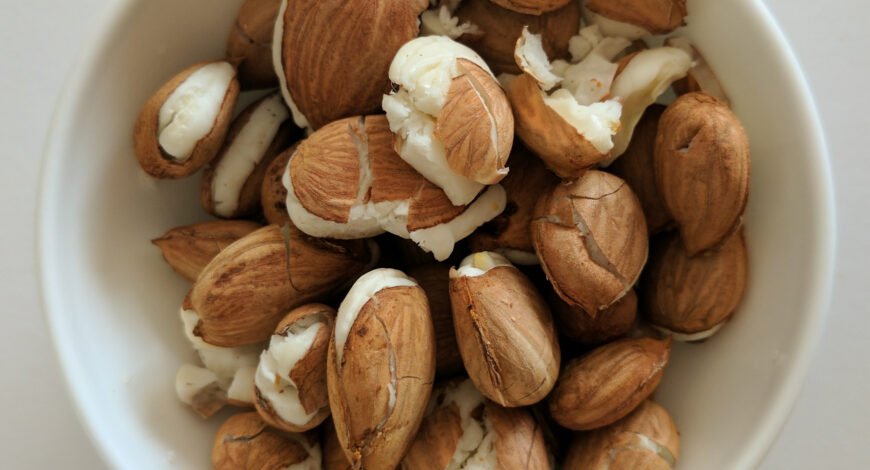
Crack open an apricot stone and you find a kernel that looks just like a small almond. In Gilgit-Baltistan these kernels are valued for snacking, flavouring, and a fragrant oil — but there is an important safety story behind them. This guide explains the difference between sweet and bitter kernels and how to use them responsibly.
- Sweet kernels are mild and low in amygdalin; bitter kernels are high in it.
- Amygdalin releases cyanide in the body — bitter kernels must be strictly limited.
- Food-safety authorities advise adults eat no more than ~3 small kernels a day; not for children.
- Claims that apricot kernels (“laetrile/vitamin B17”) treat cancer are not supported by evidence.
Sweet vs bitter: what is the difference?
Both come from apricots, but their chemistry differs. The key compound is amygdalin, which the body converts into hydrogen cyanide. Sweet kernels contain relatively little; bitter kernels contain much more — which is exactly why they taste bitter.
The cyanide question, explained simply
When amygdalin breaks down during digestion it releases cyanide. In tiny amounts the body can handle it; in larger amounts it causes symptoms such as nausea, headache, dizziness, and falling blood pressure, and in severe cases it can be life-threatening. This is why quantity matters so much with bitter kernels.
How much is safe?
The European Food Safety Authority (EFSA) estimated that an adult could eat about three small raw apricot kernels (roughly 370 mg) before exceeding the acute reference dose — and that even one small kernel could exceed the safe level for a toddler. No major food-safety authority considers raw bitter apricot kernels safe for casual snacking. Treat bitter kernels as a potent flavouring, not a snack.
About the “vitamin B17 cures cancer” claim
You may have read that amygdalin — marketed as “laetrile” or “vitamin B17” — can treat cancer. This is not supported by scientific evidence, and regulators including the US FDA have warned that it is ineffective and can cause cyanide poisoning. We do not make or endorse this claim.
How to use apricot kernels responsibly
- Sweet kernels: enjoy in moderation as a snack, much like almonds; or use almond kernels as an everyday alternative.
- Bitter kernels: use only in tiny amounts for flavour (e.g. traditional recipes), keep well away from children, and never eat them by the handful. Shop bitter apricot kernels with these limits in mind.
- Apricot kernel oil: the pressed bitter apricot kernel oil is used topically in skincare; follow product guidance.
- Prefer the fruit itself? Enjoy our dried apricots — see Hunza & Khalman apricots.
Frequently asked questions
How many apricot kernels can I safely eat?
Food-safety authorities suggest adults eat no more than about three small kernels per day, and that children should not eat them at all. Bitter kernels are best treated as a flavouring, not a snack.
Are sweet apricot kernels safe?
Sweet kernels are much lower in amygdalin and are eaten in moderation, but they are not completely free of it — so sensible portions still apply.
Does cooking remove the cyanide risk?
Heat and processing can reduce amygdalin levels but do not reliably eliminate the risk, so quantity limits still apply.
Can apricot kernels cure cancer?
No. There is no credible scientific evidence that apricot kernels, amygdalin, laetrile, or “vitamin B17” treat cancer, and they carry a real risk of cyanide poisoning.


