
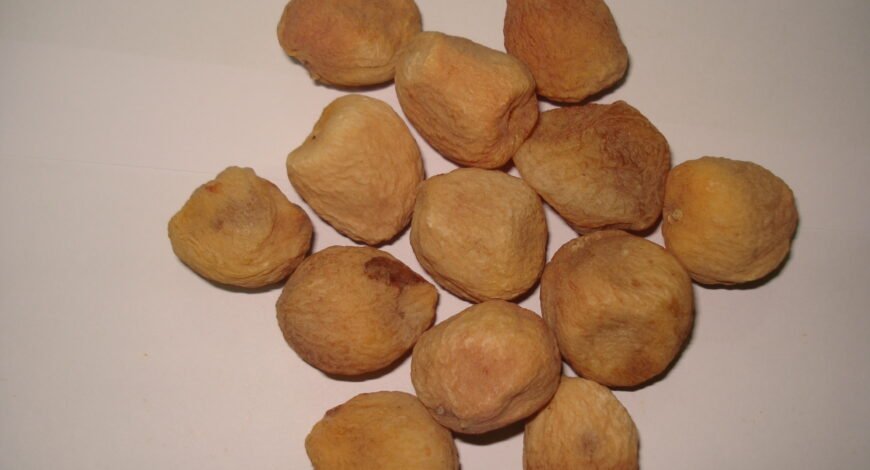
In the high valleys of Gilgit-Baltistan, apricots are more than a fruit — they are a way of life. The apricots of Hunza and the prized Khalman variety are sun-dried in clean mountain air and celebrated for their deep flavour and natural sweetness. Here is what makes them special and how to enjoy them.
- Grown at high altitude with intense sun and glacial water.
- Often sun-dried whole, with no added sugar or sulphur.
- A good source of fibre, potassium, iron, and beta-carotene.
- The kernel inside is used too — but choose sweet kernels and use bitter ones with care.
Why Hunza and Khalman apricots are special
Two things set them apart. First, terroir: short, bright summers, wide day-night temperature swings, and pure glacial-melt irrigation concentrate sugars and flavour. Second, tradition: many growers still sun-dry the fruit naturally on rooftops, often without added sugar or sulphur, which is why authentic Hunza apricots look darker and taste more intense than glossy commercial ones. The Khalman variety in particular is valued for its rich taste and double-layer drying.
Nutrition: small fruit, dense nutrition
Drying concentrates the fruit’s nutrients. Per 100 g, dried apricots are a good source of fibre and potassium, contribute iron, and supply beta-carotene (which the body converts to vitamin A).
How to enjoy them
- As a snack: eat dried apricots on their own, or with nuts such as almond kernels and walnuts.
- Soaked: soften overnight in water for a natural compote; the soaking water becomes a sweet drink.
- In cooking: add to pilafs, tagines, porridge, and baking; or enjoy as apricot jam and apricot candy.
- Premium pick: the Khalman double-layer apricot for the fullest flavour.
A note on the kernel
Crack an apricot stone and you find a kernel that looks like an almond. Sweet kernels are eaten and pressed for oil; bitter kernels are far more potent and must be used carefully. We cover this fully in sweet vs bitter apricot kernels.
Frequently asked questions
Why are Hunza apricots darker than supermarket ones?
Authentic Hunza apricots are usually sun-dried without sulphur dioxide, the preservative that keeps commercial apricots bright orange. Natural drying gives a darker colour and a deeper, more caramel-like flavour.
Are dried apricots good for you?
They are a nutrient-dense whole food — a good source of fibre and potassium with iron and beta-carotene. Because drying concentrates natural sugars, enjoy them in sensible portions.
What is the Khalman apricot?
Khalman is a prized Gilgit-Baltistan apricot variety known for rich flavour, often prepared as a premium double-layer dried product.
Can I eat the kernel inside?
Sweet apricot kernels can be eaten in moderation. Bitter kernels are much higher in natural compounds that release cyanide and must be limited — see our dedicated safety guide.
Sources & references
- Apricots, dried — nutrition data. USDA FoodData Central. Link


