
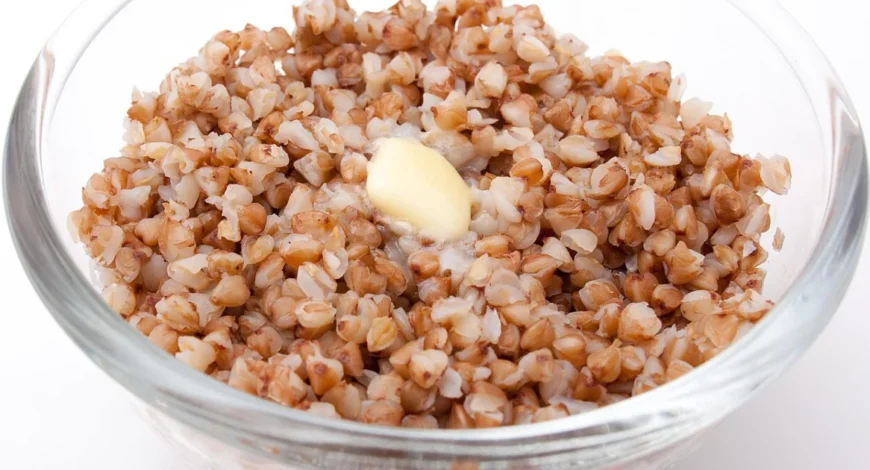
To cook buckwheat groats, rinse 1 cup of groats, then simmer them in 1½–2 cups of water for about 15 minutes, take the pan off the heat, and let it rest covered for 5–10 minutes before fluffing with a fork. That is the whole method — below is how to get light, separate grains every time, plus the traditional egg-coated trick and a few ways to serve them.
- Use a ratio of 1 cup groats to 1½–2 cups water.
- Simmer about 15 minutes, then rest off the heat before fluffing.
- Toasted groats (kasha) are nuttier; raw groats are paler and milder.
- Naturally gluten-free and a good source of plant protein and fibre.
- Coating the grains with beaten egg keeps them separate, pilaf-style.
What are buckwheat groats — and what is “kasha”?
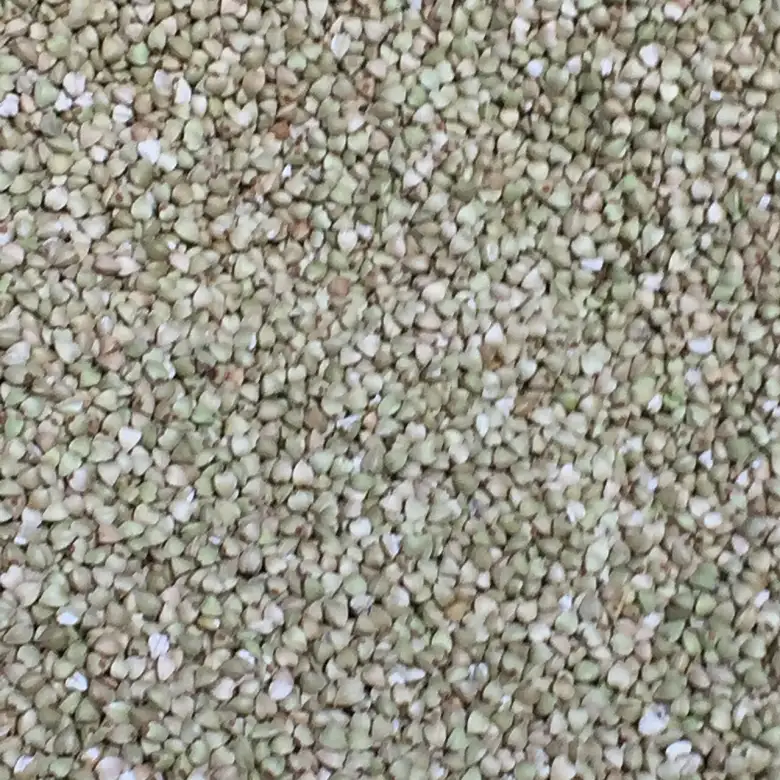
Buckwheat groats are the hulled seeds of the buckwheat plant (Fagopyrum esculentum). Despite the name, buckwheat is not a type of wheat at all — it is a pseudo-cereal, unrelated to wheat and naturally gluten-free. The word kasha usually refers to groats that have been toasted, which turns them a deeper brown and gives a stronger, nuttier flavour. Our pre-toasted roasted buckwheat groats (kasha) are ready to simmer; raw groats are milder and toast well at home.
How to cook buckwheat groats, step by step
- Rinse. Put 1 cup of groats in a sieve and rinse under cold water, then drain. This removes dust and, with raw groats, a little of their natural bitterness.
- Toast (optional). For a nuttier flavour, stir the drained groats in a dry pan over medium heat for 2–4 minutes until fragrant. Skip this if you are using pre-roasted kasha.
- Add liquid. Add 1½–2 cups of water or stock and a pinch of salt. Use the smaller amount for firm, separate grains; more for a softer, porridge-like texture.
- Simmer. Bring to a boil, then cover, reduce the heat to low, and simmer for about 15 minutes, until the liquid is absorbed.
- Rest. Take the pan off the heat and let it sit, still covered, for 5–10 minutes. Try not to lift the lid while it cooks or rests — the trapped steam finishes the grains.
- Fluff. Fluff with a fork and stir through a little butter or oil.
The traditional egg-coated (pilaf-style) method
For the fluffiest, most separate grains, cooks across Eastern Europe coat the dry groats with beaten egg before toasting. For each cup of groats, mix in one beaten egg, then stir the mixture in a dry pan over medium-high heat for 2–4 minutes until the grains separate and the egg has set. Add your hot water or stock and simmer as above. The cooked egg forms a thin barrier around each grain, so the kasha stays loose and pilaf-like instead of clumping together.
Cooking times and water ratios at a glance
| Texture you want | Water per 1 cup groats | Simmer | Rest |
|---|---|---|---|
| Firm, separate grains | 1½ cups | ~15 min | 5–10 min |
| Soft, porridge-style | 2 cups | 15–18 min | 5 min |
Buckwheat groats nutrition
Cooked buckwheat groats are light — about 92 calories per 100 g — while still providing plant protein and fibre. They are naturally gluten-free and contain rutin, a plant flavonoid that has been studied for its antioxidant properties. The figures below are for cooked, roasted groats from USDA FoodData Central.
How to serve buckwheat groats
- As a side in place of rice, with butter and fresh herbs.
- As a warm breakfast bowl with milk and a drizzle of buckwheat-flower mountain honey.
- Cooled and tossed through a grain salad with vegetables and olive oil.
- Simmered with onions and mushrooms for a savoury pilaf.
If you would rather bake with buckwheat, see our gluten-free buckwheat flour baking guide, and learn more about why Gilgit-Baltistan grows such exceptional mountain crops.
Tips for fluffy groats, not mushy
- Stick to the ratio — too much water makes the grains soft.
- Keep the lid on so the steam can finish the cooking.
- Let the groats rest before you fluff them.
- Toast the groats (or use the egg-coating method) for the most separate grains.
Frequently asked questions
What is the water-to-buckwheat ratio?
Use 1½ cups of water per 1 cup of groats for firm, separate grains, or 2 cups for a softer, porridge-like texture.
How long does buckwheat take to cook?
About 15 minutes of gentle simmering, plus a 5–10 minute rest off the heat before fluffing.
Do I need to rinse buckwheat groats?
Yes. A quick rinse under cold water removes dust and, with raw groats, some of their natural bitterness.
What is the difference between buckwheat groats and kasha?
Kasha is simply groats that have been toasted, which makes them darker and nuttier. Raw groats are paler and milder in flavour.
Is buckwheat gluten-free?
Yes. Buckwheat is a pseudo-cereal, unrelated to wheat, barley, or rye, and is naturally gluten-free. If you have coeliac disease, choose groats labelled gluten-free to rule out cross-contamination during processing.
Sources
- USDA FoodData Central — Buckwheat groats, roasted, cooked
- Kasha — Wikipedia (definition and toasting)
- Natasha’s Kitchen — How to Cook Buckwheat Kasha (ratios and timing)
- Inhabited Kitchen — the traditional egg-coating method
Written by the Pak Seabuckthorn Team, who grow and hand-select superfoods from the Karakoram and Gilgit-Baltistan. Shop our stone-cleaned buckwheat groats and roasted buckwheat groats (kasha).

