
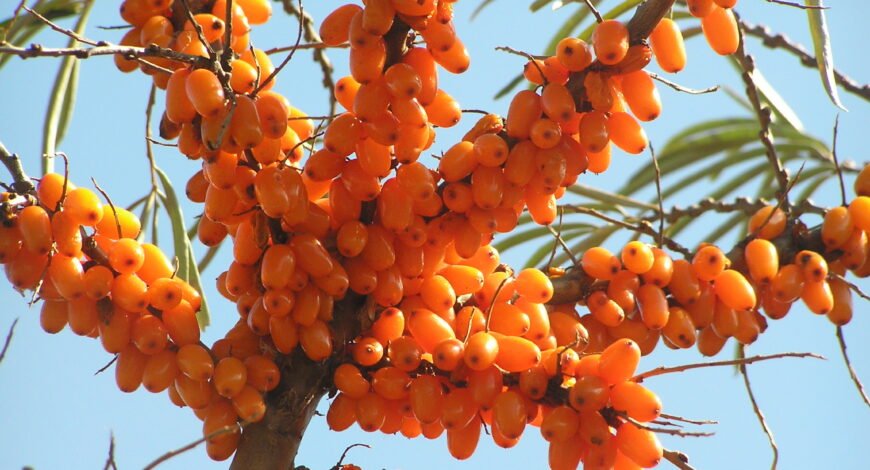
Sea buckthorn oil is one of the oldest skin remedies in the mountains of Central and South Asia — a vivid orange oil pressed from a berry that thrives in the harsh light of the Karakoram and Himalaya. It is prized for a rare omega-7 fatty acid, carotenoids, and vitamin E. Here is a practical, evidence-aware guide to what it is and how to use it on skin and hair.
- Two different oils: berry/pulp oil (omega-7, orange) and seed oil (omega-3 & 6).
- Traditionally used for dryness, minor burns, and to support the skin barrier.
- Use a few drops, do a patch test, and apply at night (it can tint fabrics).
- The science is promising; much of it is early-stage.
Berry oil vs seed oil: know the difference
“Sea buckthorn oil” can mean two things. The berry (pulp) oil is deep orange and unusually rich in omega-7 (palmitoleic acid), a fatty acid that occurs naturally in skin. The seed oil is lighter and richer in the essential fatty acids omega-3 and omega-6. Both are used in skincare, often together.
Why sea buckthorn oil is used on skin
Topically, sea buckthorn oil has a long folk history for dryness, minor burns, and wounds. Modern reviews describe anti-inflammatory and antioxidant activity and a supportive role in skin-barrier repair, although much of the published work is early-stage or in animal models rather than large human trials. In short: a well-established traditional use, with encouraging but still-developing science. For the full nutrient picture, see our guide to sea buckthorn benefits.
How to use sea buckthorn oil on your skin
A little goes a long way — the oil is potent and richly pigmented.
- Patch test first. Apply a drop to your inner forearm and wait 24 hours.
- Dilute if needed. Mix 1–2 drops of sea buckthorn berry oil into a teaspoon of a carrier oil (jojoba, almond) or your moisturiser.
- Apply at night. The orange colour can temporarily tint skin and stain pillowcases; evenings are easiest.
- Target dry areas. Press gently onto clean skin; focus on dry or rough patches.
For hair and scalp
The same oil is used as a pre-wash treatment: warm a few drops, massage into the scalp and mid-lengths, leave 30–60 minutes, then shampoo. Because of the colour, rinse thoroughly and avoid very light hair unless diluted well.
Frequently asked questions
Is sea buckthorn berry oil or seed oil better for skin?
They are complementary. Berry (pulp) oil is rich in omega-7 and carotenoids and is the classic choice for dry, mature, or compromised skin; seed oil is lighter and rich in omega-3 and 6. Many people use both.
Can I apply sea buckthorn oil directly to my face?
Yes, but use only 1–2 drops and patch test first. Because it is deeply pigmented, many people dilute it in a carrier oil or moisturiser and apply at night.
Will sea buckthorn oil stain my skin orange?
Used neat in larger amounts it can leave a temporary orange tint. A drop or two, diluted, absorbs without obvious colour. It can stain fabric, so let it absorb before bed.
Can I take sea buckthorn oil internally too?
Yes, sea buckthorn oil is also taken by mouth as directed. Start with a small amount; if pregnant, breastfeeding, or on medication, check with a healthcare professional.


